
The awards for the best journalistic stories and photos/videos, presented by the Council for Media Ethics of Macedonia ahead of 3 May, World Press Freedom Day, were handed today to several journalists and one photo reporter at a ceremony in the Europe House in Skopje.
The first prize in the competition on the topic “Facts and disinformation about climate change” was awarded to the video story: “Air pollution in Macedonia takes 5,000 lives a year, as if we were at war”, by the authors Sunčica Nikoloska (MRT), Mirjana Mirčevska Jovanović (Kanal 5) and Pelagija Mladenovska (IRL), published on the Doma.edu.mk platform, run by the Institute of Communication Studies (ICS).
The second prize went to journalist Divna Grdanova Karadžovska for the video story “How to save the Macedonian pine on Pelister,” published on TV Tera from Bitola.
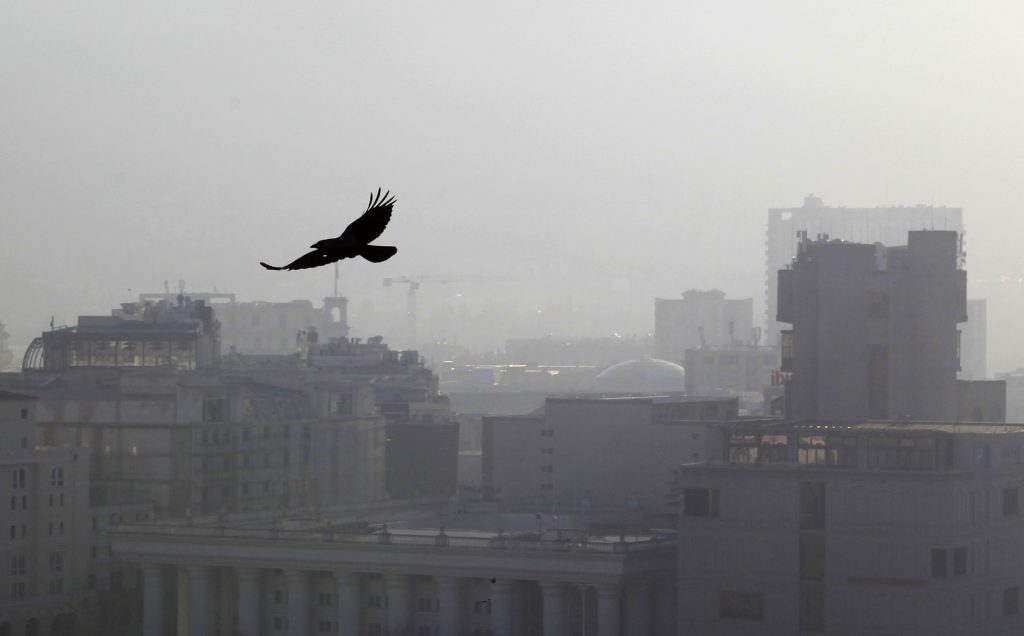
The award for the best photograph/video in a media content, introduced by CMEM for the first time this year, was awarded to the photo reporter Boris Grdanoski for the photographs titled “Smog”, “The Warmest Year” and “Escape”.
Certificates of appreciation for a series of texts on environmental hotspots in the surroundings of Veles and Prilep were awarded to journalists Katerina Topalova (MRT) and Orce Kostov (Fokus).
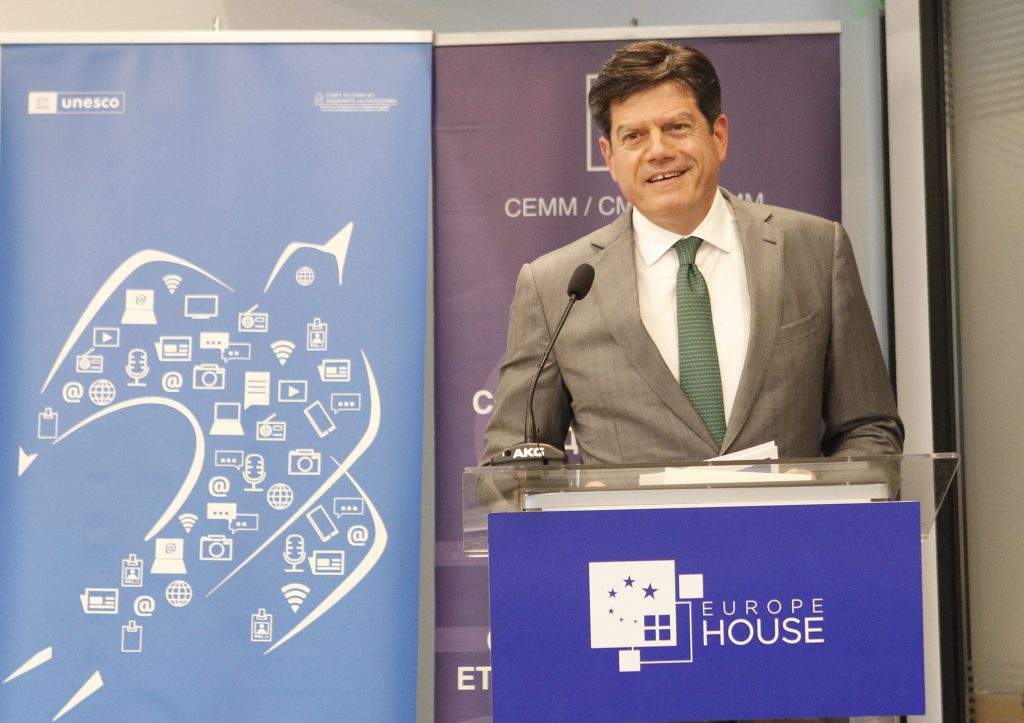
The awards were presented by the EU Ambassador to North Macedonia, Michalis Rokas, who said:
“Human-caused climate change is a fact. So are its consequences, which will become even more severe and widespread if we do not act immediately, collectively and globally. In North Macedonia, in recent years we have seen catastrophic floods, heatwaves, destructive fires. There are also other environmental problems, such as air pollution, among other things, because of the country’s dependence on coal. This has had a serious impact on people’s health for years. All this clearly speaks to the urgency of these issues. Action is needed now, with the future in mind, following the pillars of the European Green Deal, which not only tackles climate and environmental challenges, but also turns them into economic opportunities”.
Ambassador Rokas stressed that disinformation stands in the way of efforts to tackle climate change:
“Disinformation does not only confuse, it paralyzes. It delays action. It creates a false picture of uncertainty that hinders the necessary policy reform and corporate accountability. Worse still, disinformation fuels division and turns the universal concern for the health of our planet into an ideological battleground. It polarizes societies, replacing facts with distrust. And it disproportionately affects marginalized communities, which already bear the greatest burden of climate change. So, what can we do? First, we must educate ourselves and others. Second, we must strengthen trustworthy and credible sources. Third, we must speak up and stand against lies. And fourth, we must advocate for stronger mechanisms that guarantee the public’s right to receive truthful information. Today we celebrate journalists who are guided by these principles. Who build trust through their work. Who illuminate the reality of climate change, expose disinformation, and empower communities with knowledge.”
The jury that selected the best stories from a total of 30 submitted media pieces, from 25 authors, consisted of Irena Mulačka, editor-in-chief of the magazine Fokus, Biljana Georgievska, executive director of the Council for Media Ethics, and Gorjan Jovanovski, eco-activist and councillor in the City of Skopje from the independent coalition Green Humane City. Jovanovski said that it is precisely the journalists who applied with their stories for the CMEM award who can move things forward in improving the environment in the country:
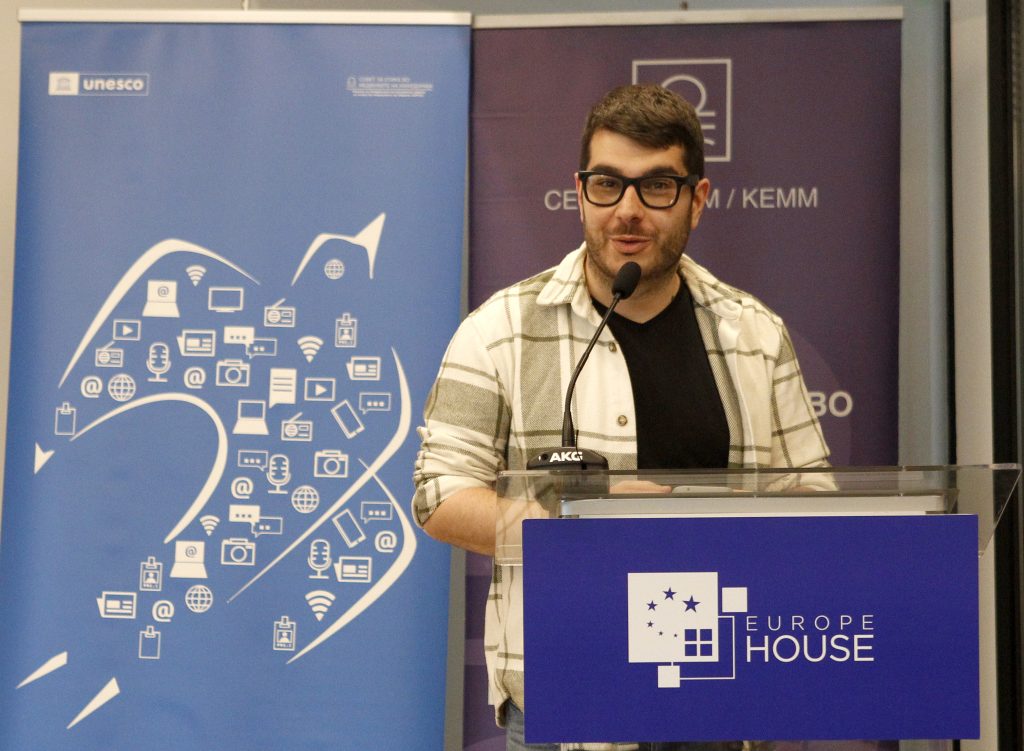
“We must recognize all those who have decided to stand on the front line for the climate, for environmental protection, and for the protection of our future here in Macedonia. Without journalists, like all those present here, and all those who applied for this award, we will not move forward. You are on the front line of the fight, you are in the first ranks, with your journalistic texts, videos, photographs, and your perseverance. I am very glad that I was part of this commission”.
CMEM is awarding its annual prizes for the second time for a topic related to the environment and climate change, because pollution and destruction of soil, water, and air in the country put the survival of all at risk, which obliges the media to sound the alarm, investigate, and seek solutions.
The competition for the best journalistic stories on the topic “Facts and disinformation about climate change” by CMEM is part of the activities in the project “Building trust in media in Southeast Europe: support for journalism as a public good”. supported by UNESCO and funded by the European Union.